Learn about our mission, our charter and principles, and who we are.
See what triggers an intervention and how supply and logistics allow our teams to respond quickly.
Discover our governance and what it means to be an association. Find a quick visual guide to our offices around the world.
Read through our annual financial and activity reports, and find out about where our funds come from and how they are spent.
Read the policies, reports, and plans on how we address issues like racism and reduce our carbon footprint, ensuring our actions align with the highest ethical standards.
Visit this section to get in touch with our offices around the world.
Médecins Sans Frontières brings medical humanitarian assistance to victims of conflict, natural disasters, epidemics or healthcare exclusion.
Learn about how, why, and where MSF teams respond to different diseases around the world, and the challenges we face in providing treatment.
Learn about the different contexts and situations in which MSF teams respond to provide care, including war and natural disaster settings, and how and why we adapt our activities to each.
Learn about our response and our work in depth on specific themes and events.
In more than 70 countries, Médecins Sans Frontières provides medical humanitarian assistance to save lives and ease the suffering of people in crisis situations.
MSF Access pushes for access to, and the development of, life-saving and life-prolonging medicines, diagnostic tests and vaccines for people in our programmes and beyond.
Based in Paris, CRASH conducts and directs studies and analysis of MSF actions. They participate in internal training sessions and assessment missions in the field.
Based in Geneva, UREPH (or Research Unit) aims to improve the way MSF projects are implemented in the field and to participate in critical thinking on humanitarian and medical action.
Based in Barcelona, ARHP documents and reflects on the operational challenges and dilemmas faced by the MSF field teams.
Based in Brussels, MSF Analysis intends to stimulate reflection and debate on humanitarian topics organised around the themes of migration, refugees, aid access, health policy and the environment in which aid operates.
This logistical and supply centre in Brussels provides storage of and delivers medical equipment, logistics and drugs for international purchases for MSF missions.
This supply and logistics centre in Bordeaux, France, provides warehousing and delivery of medical equipment, logistics and drugs for international purchases for MSF missions.
This logistical centre in Amsterdam purchases, tests, and stores equipment including vehicles, communications material, power supplies, water-processing facilities and nutritional supplements.
BRAMU specialises in neglected tropical diseases, such as dengue and Chagas, and other infectious diseases. This medical unit is based in Rio de Janeiro, Brazil.
Our medical guidelines are based on scientific data collected from MSF’s experiences, the World Health Organization (WHO), other renowned international medical institutions, and medical and scientific journals.
Providing epidemiological expertise to underpin our operations, conducting research and training to support our goal of providing medical aid in areas where people are affected by conflict, epidemics, disasters, or excluded from health care.
Evaluation Units have been established in Vienna, Stockholm, and Paris, assessing the potential and limitations of medical humanitarian action, thereby enhancing the effectiveness of our medical humanitarian work.
MSF works with LGBTQI+ populations in many settings over the last 25-30 years. LGBTQI+ people face healthcare disparities with limited access to care and higher disease rates than the general population.
The Luxembourg Operational Research (LuxOR) unit coordinates field research projects and operational research training, and provides support for documentation activities and routine data collection.
The Intersectional Benchmarking Unit collects and analyses data about local labour markets in all locations where MSF employs people.
To upskill and provide training to locally-hired MSF staff in several countries, MSF has created the MSF Academy for Healthcare.
This Guide explains the terms, concepts, and rules of humanitarian law in accessible and reader-friendly alphabetical entries.
The MSF Paediatric Days is an event for paediatric field staff, policy makers and academia to exchange ideas, align efforts, inspire and share frontline research to advance urgent paediatric issues of direct concern for the humanitarian field.
The MSF Foundation aims to create a fertile arena for logistics and medical knowledge-sharing to meet the needs of MSF and the humanitarian sector as a whole.
A collaborative, patients’ needs-driven, non-profit drug research and development organisation that is developing new treatments for neglected diseases, founded in 2003 by seven organisations from around the world.
Our digital portal dedicated to sharing the latest medical evidence from our humanitarian activities around the globe.
Noma is a preventable and treatable neglected disease, but 90 per cent of people will die within the first two weeks of infection if they do not receive treatment.
The TIC is aiming to change how MSF works to better meet the evolving needs of our patients.
MSF's telemedicine hub aims to overcome geographic barriers for equitable, accessible, and quality patient care.
Launched in 2012, the MSF Sweden Innovation Unit deploys a human-centered approach for promoting a culture of innovation within MSF.
The GeoMSF platform is a dynamic one-stop-shop website for all of MSF's GIS related services and products. Access maps and applications through the catalogue, request geographical support, or produce a map on GeoMSF.
Cholera has existed for centuries. We know how to prevent and treat it. Yet in 2024 and 2025, Sudan endured the deadliest cholera outbreak recorded in its modern history.
The disease reached all 18 states for the first time, with more than 124,000 cases and 3,500 deaths, as stated by the World Health Organization.
I have spent much of my medical career working in emergencies. What haunts me about this outbreak is not simply that it happened, but that so many cases and deaths could have been prevented.
Sudan has faced at least 16 cholera outbreaks since the 1960s, including major waves in 2006, from 2016 to 2018, and in 2019. Seasonal rains and weak infrastructure exacerbated those outbreaks.
Over the past two years, war altered the pattern. Since fighting erupted between the Sudanese Armed Forces and the Rapid Support Forces in April 2023, our teams have seen cholera follow the routes of conflict and the poor living conditions in displacement sites. Cases surged in Port Sudan, Al-Gedaref, Khartoum and Kosti during the dry season, months before the rains that usually accelerate transmission.
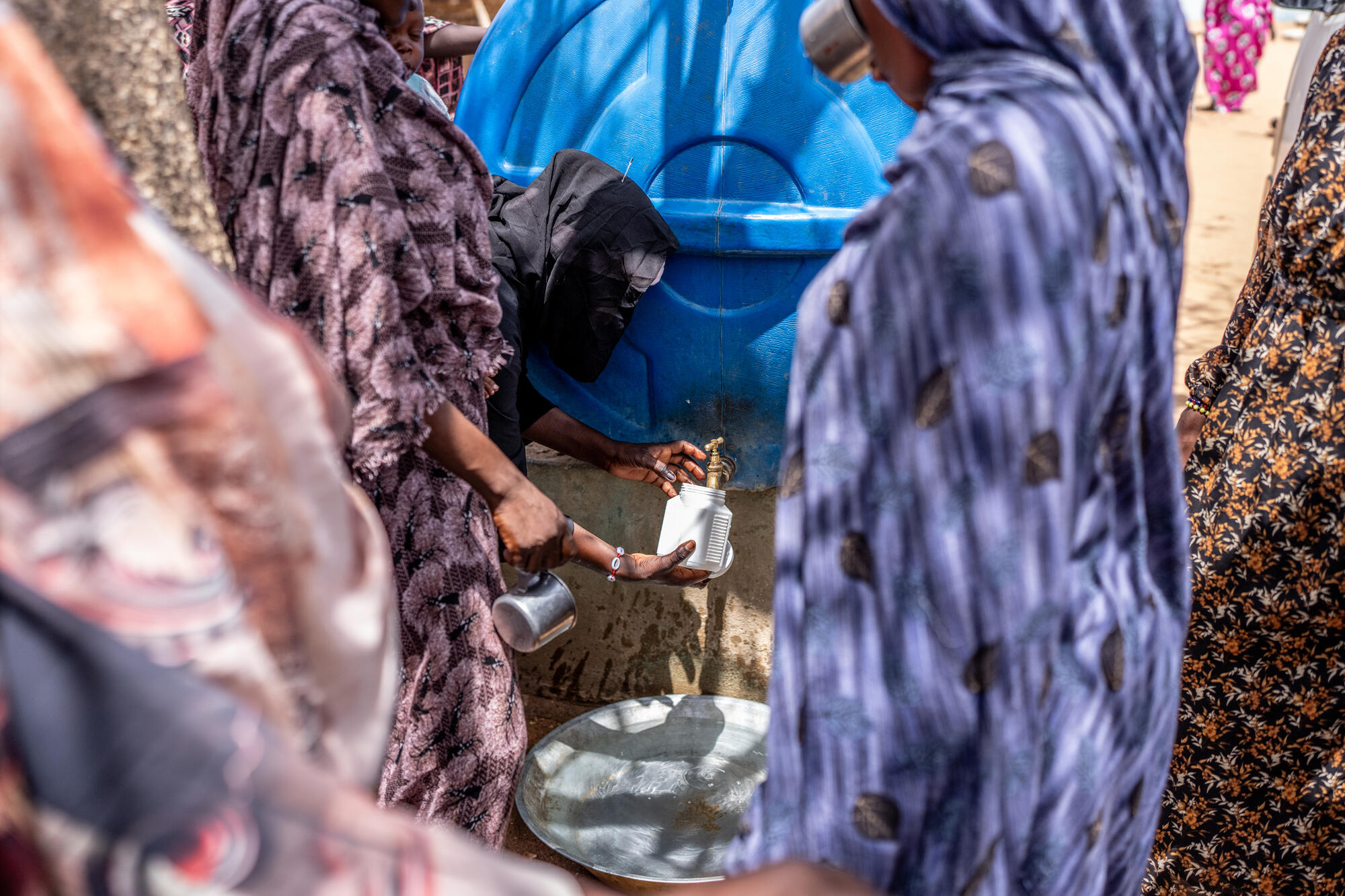
In February 2025, a strike hit the power station supplying Kosti, in White Nile state. The city’s water treatment plant stopped working, and families had little choice but to collect water from the river and buy water carried by donkey carts. Within days of the attack, hundreds of severely ill people arrived at Kosti Teaching hospital with watery diarrhoea symptoms. By 5 March 2025, less than one month later, more than 3,000 cholera patients had been admitted and over 100 had died.
The same chain of events appeared elsewhere. In Khartoum, attacks on power stations in May cut electricity to pumps supplying safe water. Blackouts also disrupted water treatment and health facilities. Chlorine and other essential supplies were delayed or ran short. Funding gaps forced water-trucking services to stop, leaving families to choose between unsafe water and water they could not afford.
Two years on, we can now speak of what we have learned. These surges followed the rhythms of war rather than the seasons or the weather. The greatest burden fell on people with the least protection: families displaced within Sudan, often living in overcrowded camps or informal settlements without clean water, sanitation services, or healthcare close to home. In some places, outbreaks had begun within days of new arrivals.
Cholera did not spread in a vacuum. Conflict created and deepened the conditions that allowed it to develop: damaged water and power systems, mass displacement, blocked humanitarian access, and a response lacking resources. The disease is preventable. The repeated failure to prevent it in the past reflects political choices to not protect civilians, to target and accept damage to civilian infrastructure, to block fast-track aid, and to cut funds allowing proper preparedness.
Médecins Sans Frontières was far from alone in this past response. Humanitarian organisations worked under extraordinary constraints. Where international teams could not go, Sudan’s volunteer-run Emergency Response Rooms often acted first. They organised water points, alerted health authorities to new cases and kept people alive before larger responses arrived. Much of the response was carried out by the Sudanese health workers and the communities themselves.
This large outbreak was contained by March 2026, but the danger has not ended. A new outbreak was declared in West Kordofan state in June, after acute watery diarrhoea cases had appeared in May, before the rainy season was fully underway. Cases also emerged in North Kordofan state, though numbers have been decreasing. Once again, conflict, lack of clear surveillance data, and inadequate access to safe water created conditions for the disease to appear.
What did we learn? Sudanese responders, health authorities and humanitarian organisations have all worked to prepare, to some extent, for future outbreaks. What is still missing is speed: delay is paid for in lives. Two things must happen now, together.
The first is the sense of urgency, we must move at the speed this outbreak demands. My message to the donor community, to Sudan’s Federal Ministry of Health, and to other humanitarian organisations is simple: timeliness matters as much as the investment itself. Surveillance must be strengthened to identify cases early.
The response cannot stay centralised; we need decentralised ways of working that strengthen surveillance on the ground and get ahead of transmission. That means investing urgently in preparedness. That includes vaccination plans and water and sanitation services. Where a life can be saved from a disease as preventable as cholera, we must do everything we can.
The second is accountability. Parties to the conflict, and those with influence on them, must respect their obligations under international humanitarian law and the Geneva Conventions to protect civilian infrastructure, such as water and power systems, essential to people’s survival. These are not optional safeguards. When a power station or water treatment plant is attacked, the consequences go far beyond the destruction of infrastructure: it is seen in the next cholera ward, filled with patients, some of whom will die.
The lesson we learned from the past cholera outbreak could not be clearer. The only real question left is whether those involved are finally willing to learn from it, through humanitarian action that funds and fast-tracks preparedness, and political will that protects civilians and infrastructure, before history repeats once more.
Your donations pay for millions of consultations, surgeries, treatments and vaccinations every year.
140, Route de Ferney, 1202 Geneva, Switzerland
Federal identification number: UID CH-660.1.555.004-1
About the Author