Read The Diplomat, Know The Asia-Pacific
Arrmanatha Nasir is highly qualified, but his success may hinge on whether or not he has access to President Prabowo Subianto.
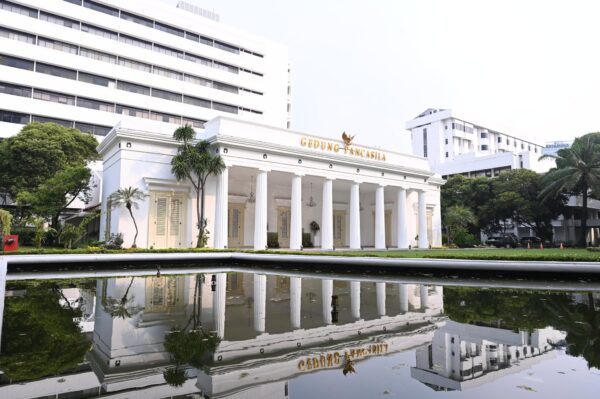
The Pancasila Building, part of the headquarters of the Indonesian Ministry of Foreign Affairs in Jakarta, Indonesia.
On October 1, Indonesia’s President Prabowo Subianto finally replaced Sugiono, who had served as foreign minister for the past two years, with the veteran diplomat Arrmanatha Nasir. While one may welcome the appointment of a seasoned diplomat as foreign minister, it is unclear whether he will have enough power and presidential access to steer Indonesia’s foreign policy back to a steadier, more familiar course, as under previous administrations.
As the first foreign minister in decades without substantial foreign policy experience, Sugiono’s tenure was marked by consequential decisions that broke foreign policy precedent. During his time at the helm of the Foreign Ministry, Indonesia endorsed a joint statement with China that appeared to depart from its long-standing refusal to recognize its overlapping claim with China near the Natuna Islands, potentially lending credence to China’s illegal nine-dash line claim. Additionally, it joined both BRICS and U.S. President Donald Trump’s Board of Peace, and signed the unequal Agreement on Reciprocal Trade with Washington, despite this having dubious benefits to Indonesia. Internally, Indonesian diplomats made anonymous complaints to Indonesian media regarding the chaotic Foreign Ministry workflow and being left in the dark about vital foreign policy decisions that were deliberated within Prabowo’s inner circle.
In this context, Nasir’s appointment comes as a breath of fresh air. In contrast to the inexperienced Sugiono, Nasir has 29 years of experience as a Foreign Ministry insider who has filled two ambassadorial-level postings and served a five-year stint as the Ministry’s spokesperson, among other roles. Therefore, the Foreign Ministry has returned to its decades-long tradition of having career diplomats at its helm. More importantly, during his tenure as Sugiono’s vice foreign minister, Nasir was responsible for the Ministry’s internal dynamics, suggesting he should have had direct knowledge of discontent among the Ministry’s diplomats and staff. Thus, under his tenure, diplomats’ involvement in technocratic deliberations on important foreign policy matters could be improved.
While there is no doubt about Nasir’s ability to steer Indonesia’s foreign policy in the coming years, it is less clear whether he will be given the necessary opportunities and access to do so. Reports in the Indonesian news magazine Tempo indicate that access to President Prabowo, even for ministers, is very limited and heavily curated by members of his inner circle at the presidential palace, thus handicapping close coordination between the president and his cabinet members across a wide range of governmental affairs.
Foreign policy is not immune to this, and at least three major foreign policy decisions under Sugiono’s tenure were made without properly following the Foreign Ministry’s recommendations. In the lead-up to the 2024 Sino-Indonesian joint statement, Indonesian diplomats were ordered to reject any stipulation regarding joint development in overlapping areas of the South China Sea, only for the president to sign it anyway. Some reports suggest that Prabowo followed the advice of his closest confidants, who view the dispute purely in economic terms.
Additionally, high-ranking Foreign Ministry officials expressed grave concern about the one-sidedness of the U.S.-Indonesia Agreement on Reciprocal Trade signed earlier this year, yet the president signed it regardless. Lastly, Indonesia joined the Board of Peace without proper deliberation with relevant Indonesian ambassadors in the Middle East, and several Indonesian diplomats anonymously complained that Indonesia’s decision to join the organization was problematic in terms of Jakarta’s policy of support for the Palestinian cause. Even Sugiono himself admitted publicly that the decision to join was made “quite fast.”
These phenomena suggest a gap in foreign policy formulation between career diplomats at the Foreign Ministry and politicians at the Presidential Palace. Ideally, the two should work in concert: Foreign Ministry staff should work out the technocratic and strategic foreign policy details, while the palace uses that advice to shape and consider broader implications beyond foreign policy, and vice versa. Additionally, bureaucrats typically spend years or decades in the Ministry, accumulating knowledge and experience that help ensure Indonesia’s foreign policy does not wildly deviate and remains consistent. If the Palace isolates itself, the views and analyses of seasoned, capable Foreign Ministry diplomats that help maintain policy stability and consistency may not be reflected in the final strategic decision, making it vulnerable to decisions of dubious benefit for Jakarta.
Nasir’s appointment, therefore, must be seen in that context. One may justifiably have little doubt about his ability to steer Indonesia’s foreign policy and muster the Ministry’s diplomats to that end. Yet, the President will have to allow the Minister quick and easy access to the Palace and ensure close coordination between it and the Ministry, such as inviting the Foreign Minister into policy deliberations with foreign policy implications and implementing his recommendations, as well as accepting the Minister’s request for an audience whenever necessary. Without proper access and consultation, no matter how brilliant or qualified the foreign minister may be, the Palace could make more major foreign policy decisions with dubious benefits and high risks.
While Prabowo wants to be more hands-on in foreign policymaking, if given access and proper consultation, an able foreign minister and diplomats can ensure that Prabowo leaves a better foreign policy legacy, since they will be able to make refined analyses and policies to achieve his goals more strategically. The question is, will the President finally muster his able foreign service to that end?
The views expressed in this article are the author’s own.
Subscribe today and join thousands of diplomats, analysts, policy professionals and business readers who rely on The Diplomat for expert Asia-Pacific coverage.
Get unlimited access to in-depth analysis you won’t find anywhere else, from South China Sea tensions to ASEAN diplomacy to India-Pakistan relations. More than 5,000 articles a year.
Already have an account? .
On October 1, Indonesia’s President Prabowo Subianto finally replaced Sugiono, who had served as foreign minister for the past two years, with the veteran diplomat Arrmanatha Nasir. While one may welcome the appointment of a seasoned diplomat as foreign minister, it is unclear whether he will have enough power and presidential access to steer Indonesia’s foreign policy back to a steadier, more familiar course, as under previous administrations.
As the first foreign minister in decades without substantial foreign policy experience, Sugiono’s tenure was marked by consequential decisions that broke foreign policy precedent. During his time at the helm of the Foreign Ministry, Indonesia endorsed a joint statement with China that appeared to depart from its long-standing refusal to recognize its overlapping claim with China near the Natuna Islands, potentially lending credence to China’s illegal nine-dash line claim. Additionally, it joined both BRICS and U.S. President Donald Trump’s Board of Peace, and signed the unequal Agreement on Reciprocal Trade with Washington, despite this having dubious benefits to Indonesia. Internally, Indonesian diplomats made anonymous complaints to Indonesian media regarding the chaotic Foreign Ministry workflow and being left in the dark about vital foreign policy decisions that were deliberated within Prabowo’s inner circle.
In this context, Nasir’s appointment comes as a breath of fresh air. In contrast to the inexperienced Sugiono, Nasir has 29 years of experience as a Foreign Ministry insider who has filled two ambassadorial-level postings and served a five-year stint as the Ministry’s spokesperson, among other roles. Therefore, the Foreign Ministry has returned to its decades-long tradition of having career diplomats at its helm. More importantly, during his tenure as Sugiono’s vice foreign minister, Nasir was responsible for the Ministry’s internal dynamics, suggesting he should have had direct knowledge of discontent among the Ministry’s diplomats and staff. Thus, under his tenure, diplomats’ involvement in technocratic deliberations on important foreign policy matters could be improved.
While there is no doubt about Nasir’s ability to steer Indonesia’s foreign policy in the coming years, it is less clear whether he will be given the necessary opportunities and access to do so. Reports in the Indonesian news magazine Tempo indicate that access to President Prabowo, even for ministers, is very limited and heavily curated by members of his inner circle at the presidential palace, thus handicapping close coordination between the president and his cabinet members across a wide range of governmental affairs.
Foreign policy is not immune to this, and at least three major foreign policy decisions under Sugiono’s tenure were made without properly following the Foreign Ministry’s recommendations. In the lead-up to the 2024 Sino-Indonesian joint statement, Indonesian diplomats were ordered to reject any stipulation regarding joint development in overlapping areas of the South China Sea, only for the president to sign it anyway. Some reports suggest that Prabowo followed the advice of his closest confidants, who view the dispute purely in economic terms.
Additionally, high-ranking Foreign Ministry officials expressed grave concern about the one-sidedness of the U.S.-Indonesia Agreement on Reciprocal Trade signed earlier this year, yet the president signed it regardless. Lastly, Indonesia joined the Board of Peace without proper deliberation with relevant Indonesian ambassadors in the Middle East, and several Indonesian diplomats anonymously complained that Indonesia’s decision to join the organization was problematic in terms of Jakarta’s policy of support for the Palestinian cause. Even Sugiono himself admitted publicly that the decision to join was made “quite fast.”
These phenomena suggest a gap in foreign policy formulation between career diplomats at the Foreign Ministry and politicians at the Presidential Palace. Ideally, the two should work in concert: Foreign Ministry staff should work out the technocratic and strategic foreign policy details, while the palace uses that advice to shape and consider broader implications beyond foreign policy, and vice versa. Additionally, bureaucrats typically spend years or decades in the Ministry, accumulating knowledge and experience that help ensure Indonesia’s foreign policy does not wildly deviate and remains consistent. If the Palace isolates itself, the views and analyses of seasoned, capable Foreign Ministry diplomats that help maintain policy stability and consistency may not be reflected in the final strategic decision, making it vulnerable to decisions of dubious benefit for Jakarta.
Nasir’s appointment, therefore, must be seen in that context. One may justifiably have little doubt about his ability to steer Indonesia’s foreign policy and muster the Ministry’s diplomats to that end. Yet, the President will have to allow the Minister quick and easy access to the Palace and ensure close coordination between it and the Ministry, such as inviting the Foreign Minister into policy deliberations with foreign policy implications and implementing his recommendations, as well as accepting the Minister’s request for an audience whenever necessary. Without proper access and consultation, no matter how brilliant or qualified the foreign minister may be, the Palace could make more major foreign policy decisions with dubious benefits and high risks.
While Prabowo wants to be more hands-on in foreign policymaking, if given access and proper consultation, an able foreign minister and diplomats can ensure that Prabowo leaves a better foreign policy legacy, since they will be able to make refined analyses and policies to achieve his goals more strategically. The question is, will the President finally muster his able foreign service to that end?
The views expressed in this article are the author’s own.
Trystanto Sanjaya is a Visiting Fellow at the Norwegian Institute of International Affairs in Oslo, where he focuses on Indonesia’s foreign policy and regional security.
Get briefed on the story of the week, and developing stories to watch across the Asia-Pacific.
About the Author