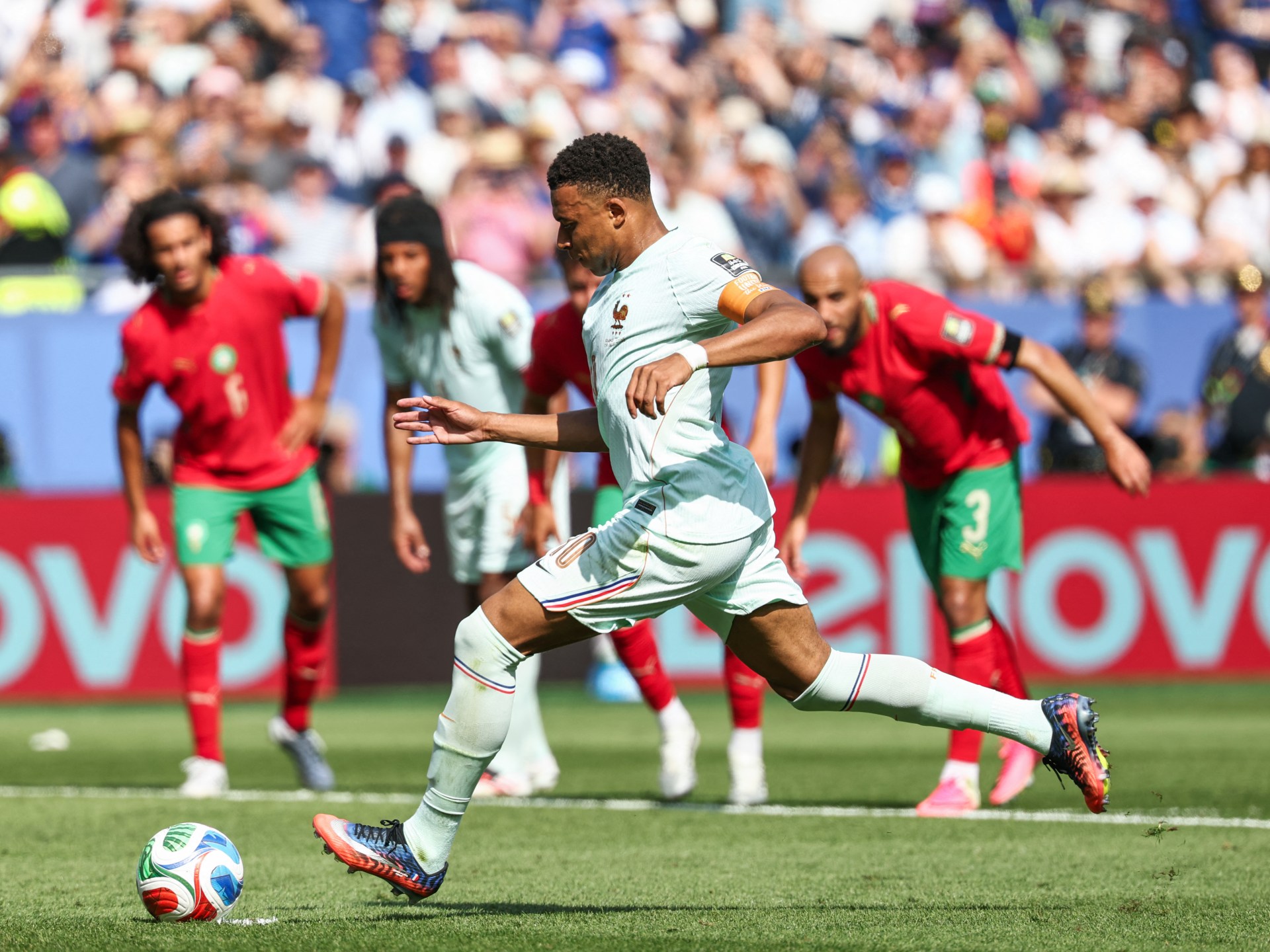
Several games in the 2026 World Cup have already ended in dramatic penalty shootouts.
Save
Share
It is the business end of the World Cup and as the games get tighter and tenser, many of them end up going to extra time or the dreaded penalty shootout.
In this explainer, we break down what extra time is, and what the rules for extra time and penalty shootouts are.
If the 90 minutes of standard gameplay fail to yield a winner in the World Cup knockout stages, extra time, or an additional period of play, is used to determine a winner.
This is a tiebreaker phase before moving on to penalties to determine the winner of the match.
Extra time lasts for a total of 30 minutes, broken into two 15-minute halves.
At half-time, the teams switch sides as they do during a 90-minute match.
A penalty shootout – when a series of players from each side takes aim at the goal one after another – takes place if a match is still tied after the 30 minutes of extra time.
A coin toss by the referee determines which goal the shootout is to be taken at. A second toss usually decides which team takes the first strike.
In the initial round, each team selects five players to take the first five strikes. Teams alternate attempts: Team A, then Team B, and so on.
Only players who were on the pitch at the final whistle of extra time can take penalties, and any eligible player can be chosen as a striker, including the goalkeeper.
If the teams remain tied after five penalties each, the shootout goes to sudden death.
Each team takes one penalty per round. As soon as one team scores while the other misses in the same pair, the shootout ends.
The goalkeeper must remain on the goal line, facing the striker, between the posts until the ball is kicked. He can move along the line laterally but may not advance in front of it.
Follow Al Jazeera English:
About the Author