Researcher in sovereign debt and development finance at the Institute for Economic Justice
On the sidelines of the recent IMF and World Bank annual meetings, one of the most notable reforms of the global debt architecture came from the establishment of a Borrowers Platform co-ordinated by the UN. The impetus for the platform came from the UN’s Fourth Financing for Development (FfD4) Conference in Seville, Spain, in 2025, agreed upon by all 190 countries.
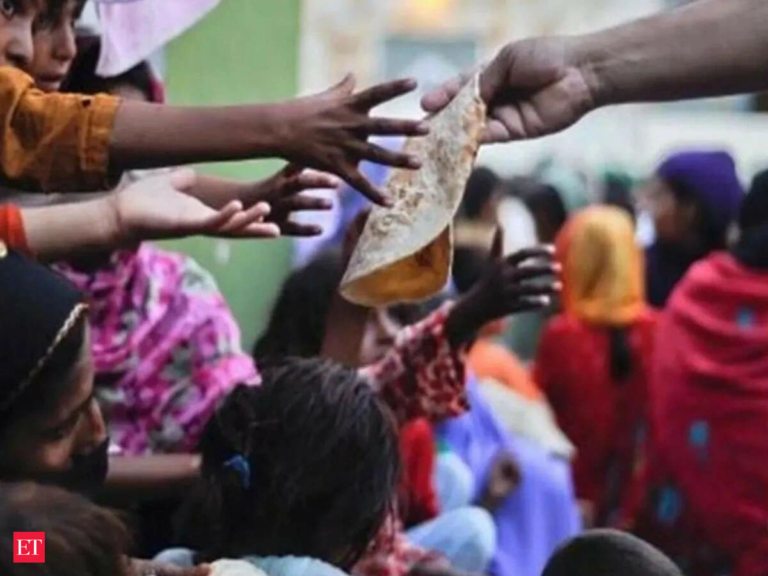
The platform’s launch comes amid great strain on the global economy, with several internal and external factors exacerbating a debt and development crisis. High debt burdens are diverting public resources away from essential spending on public infrastructure and undermining growth. The external debt position of many developing countries is alarmingly high, with 54 countries, home to 3.4-billion people, spending more on servicing debt than on health or education.
The Borrowers Platform is styled as a permanent member state-led space to manage rising debt burdens by sharing knowledge, navigating debt renegotiations, improving data transparency, leveraging collective technical expertise, engaging in practical experiences and seeking solutions to common challenges developing countries face in the global debt architecture.
The platform also aims to strengthen the collective voice of developing countries to improve engagement with creditor groups that have long-standing institutions that co-ordinate positions, exchange information and develop common approaches such as in the Paris Club. The platform’s members have emphasised that it is not a crisis co-ordination mechanism, nor a forum for collective renegotiation of unsustainable debts.
Many countries that default are defaulting for the first time, with government officials who have little knowledge of the rules of the Paris Club debt restructuring game, with processes and rules that are often inadequately understood and applied inconsistently. The absence of a centralised legal framework (for instance, an international bankruptcy court) for sovereign debt leaves negotiations vulnerable to fragmentation, unpredictable litigation and isolated disputes.
Many countries that default are defaulting for the first time, with government officials who have little knowledge of the rules of the Paris Club debt restructuring game, with processes and rules that are often inadequately understood and applied inconsistently.
Stronger debt acquisition, management and resolution capabilities can send positive signals to creditors and credit rating agencies by reducing uncertainty, improving transparency and supporting more predictable debt outcomes, which may help lower the cost of capital over time.
The unfolding debt distress in Africa compelled South Africa to make debt sustainability for low-income countries one of its four presidential priorities in its 2025 G20 presidency. Despite debt distress being a stated priority and of keen interest to President Cyril Ramaphosa, progress on debt restructuring reform remained limited. Support for the Borrowers Platform is perhaps the only practical outcome on sovereign debt resolution coming out of South Africa’s G20 presidency, with Ramaphosa offering to convene the platform’s inaugural meeting in 2026.
Support for the Borrowers Platform by South Africa makes sense for five reasons related to existing commitments based on national values and interests:
How South Africa positions itself in the international financial architecture has implications for its membership of the platform. In particular, taking up full membership of the Paris Club would limit its ability to be a member of the Borrowers Platform.
In 2022 South Africa transitioned from being an ad hoc member of the Paris Club, which it has been since 2015, to a prospective member, with the opportunity to join as a full member. Prospective member status means South Africa is in the process of being integrated into a full member and is currently treated as a full member, with inclusion in all the Paris Club’s meetings. Prospective members are testing the waters and do not have an obligation to join as a full member.
A return to Paris Club ad hoc participant status will not harm South Africa’s interests while still allowing it to be a member of the Borrower’s Platform. Ad hoc participant status allows participation in official creditor committees on a case-by-case basis when it has creditor exposure in a given default and allows South Africa to champion the issue of debt distress in Africa and the Global South through the Borrowers Platform.
This is a neutral move aligning with the Group of 77 developing countries broadly and would not aggravate Organisation for Economic Co-operation and Development (OECD) creditor countries given that there are already a number of countries with this status. OECD countries will also come to appreciate the role South Africa is playing in reducing default risks along the debt cycle, which is in their interests as creditors.
South Africa should become a leading supporter of the Borrowers Platform consistent with its international commitments, its aspiration to exercise constructive leadership on the continent, and its broader objective of strengthening the voice and agency of developing countries.
Business Day
Would you like to comment on this article?
Sign up (it's quick and free) or sign in now.
Please read our Comment Policy before commenting.
1
2
3
2026 © Arena Holdings
About the Author