Let Grocery Dive’s free newsletter keep you informed, straight from your inbox.
But the strategy, outlined earlier this week by CEO Greg Foran, also sends a clear message to employees as well as the industry.
Pardon the Disruption is a column that looks at the forces shaping food retail.
The weather in Cincinnati early this week was unseasonably warm, with temperatures topping out in the 80s. But if anyone happened to notice a chill in the air around Kroger’s headquarters, well, that wouldn’t come as a surprise.
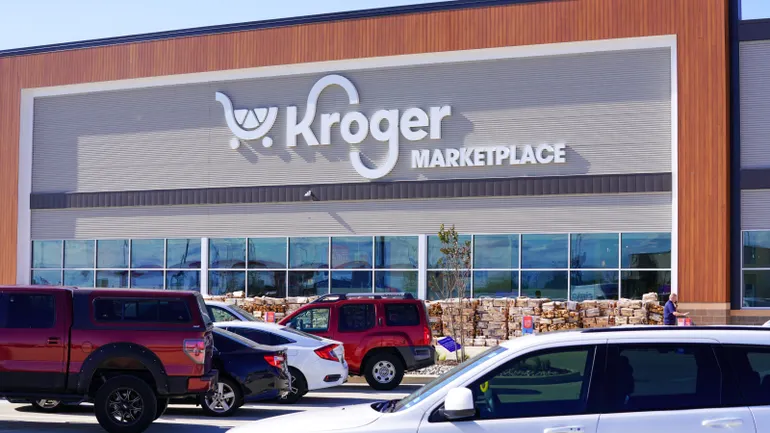
That’s because the supermarket chain’s CEO, Greg Foran, announced on Monday a corporate layoff plan big enough to cast a pall over the desks, conference rooms and test kitchens at Kroger HQ. Over the next three years, Foran wrote in an internal memo, the company will reduce its corporate workforce by approximately 3,000 jobs in an effort to reduce complexity and squeeze costs out of what’s become a bloated corporate ship.
Industry experts and anyone who knows the difference between a planogram and a marketing plan have sensed that big changes are afoot at the nation’s largest supermarket chain — and rightfully so. Kroger is feeling intense pressure from the likes of Walmart, Costco and Amazon, and that pressure has ratcheted up to a full-blown red alert as rising prices continue to weigh on shoppers. Close rival and former merger dance partner Albertsons is currently withering under this pressure.
The layoffs are not surprising, but the sheer size of Foran’s plan — which will impact approximately 37% of Kroger’s corporate workforce, Bloomberg reported — still elicited gasps from across the industry.
The shock is not just about the size of the cuts but also the timeline involved. Three years is an awfully long time to wonder about job security, and the prospect of lacking clarity for that long may drive valuable workers to seek employment elsewhere.
“Thousands of people spend that time guessing, and the strongest performers with options tend to leave first,” David Grossman, founder and CEO of The Grossman Group, a management and communications advisory firm, wrote in emailed comments.
Grossman, whose firm has worked with restaurant chains and food suppliers, among other companies, said he can’t recall seeing a grocer lay out a corporate layoff plan with a three-year time horizon before.
Foran tried to soften the blow and rationalize the layoff plan as a necessary move, noting in his memo that Kroger “will not ask anyone to wait longer than necessary for clarity about their roles.” I’m betting that won’t be enough to keep many corporate employees from punching up their resumes, scanning job boards and taking calls with recruiters.
This is not the first time Foran has overseen this sort of move. While he was president of Walmart U.S., the big box retailer laid off thousands of employees across stores and its corporate offices. In 2016, Walmart eliminated 7,000 back-office jobs in order to focus more on its sales floor operations.
The Walmart-ification of Kroger is in full swing this year. Along with announcing mass layoffs, Kroger under Foran has gotten tougher with supplier negotiations and hired a few key executives with experience at Walmart.
It’s hard to argue with copying the Walmart playbook, given the success that retailer has had in vacuuming up grocery market share. And Foran seems to have the company’s hard-charging ethos baked into his DNA. In addition to helping oversee mass layoffs at Walmart, Foran was mentored by Jack Shewmaker, a longtime deputy to Walmart founder Sam Walton, according to the book “Winner Sells All” by Jason Del Ray.
But there’s more to Kroger’s layoffs strategy than just improving efficiency. It also sends a message. The move, and the way it was announced, tests employees’ commitment to the company and its improvement plan. The message seems to be: Speed and efficiency are paramount. If you aren’t fully bought in, then leave.
The trouble is, as Grossman pointed out, Kroger may end up chasing away employees it would otherwise like to keep around. In addition to becoming leaner and faster, the supermarket chain wants to make its stores more enticing places to shop, with fresher and trendier products lining its aisles. You can’t hack and slash your way to a better experience.
Kroger may find it challenging to keep control of the narrative, Grossman pointed out. Foran’s mention in his memo of utilizing new technology has spun up narratives about the company getting overtaken by artificial intelligence.
“If the story becomes ‘AI is replacing Kroger’s corporate staff’ with no evidence, employees may believe that version over the company’s,” Grossman wrote.
And yet, anyone who doubts Kroger’s latest move need only look at Walmart’s path over the past 10-plus years. In addition to becoming ruthlessly efficient, that retailer has improved pay for its employees while also leveling up its stores and digital shopping experiences. Walmart’s story is one of a company that’s gotten to have its cake and eat it, too.
Kroger is not anywhere near Walmart’s level, but Foran sees the roadmap to get there, and he knows better than anyone that it can work.
Get the free daily newsletter read by industry experts
Costco, Amazon and Walmart each saw their share of grocery sales increase over the past year, while major supermarket companies posted declines, according to Numerator data.
More than two-thirds of food retailers polled by FMI in early 2026 said they employ the technology, compared with 47% a year ago.
Keep up with the story. Subscribe to the Grocery Dive free daily newsletter
Subscribe to Grocery Dive for top news, trends & analysis
Sign up for the free newsletter.
Interested? Explore more of what has to offer.
Thanks for signing up! Please keep an eye out for a confirmation email from [email protected] To ensure we make it into your inbox regularly, add us to your allow list, mark us as a safe sender, or add us to your address book. Check out more from
Get the free daily newsletter read by industry experts
Want to share a company announcement with your peers?
Get started ➔
More than two-thirds of food retailers polled by FMI in early 2026 said they employ the technology, compared with 47% a year ago.
The Times Square store packs in all the discounter’s classic offerings, from private brands to household essentials.
The free newsletter covering the top industry headlines
About the Author