Just over a month ago, a MAGA-aligned rightwing juggernaut appeared to be on a roll in Latin America.
The far right had captured every presidential election since Venezuela’s Nicolás Maduro was reelected in July 2024. In addition, recent parliamentary elections have landed the Bahamas, Belize, Trinidad and Tobago, Guyana, and Jamaica in MAGA-aligned alliances such as the Shield of the Americas.
Among the remaining leftist countries in the region, the US had kidnapped Venezuela’s Maduro and imposed a “negotiated sovereignty” on that nation. An ever-intensifying blockade continued to asphyxiate Cuba. And a renewed offensive was mounted against Nicaragua. Brazil and Mexico anchored the left-leaning camp, with Uruguay on the center-left.
Compared to the heyday of the Pink Tide, when Latin America was the international epicenter of independence from Washington, the region was increasingly looking like a casualty of the Donroe Doctrine. Yet this apparent rightward consolidation concealed vulnerabilities that would soon become evident.
The new right
Besides its signature sycophantic worship of the US, Latin America’s new populist right shares an ideological antipathy to “wokism,” a fixation on mano dura solutions to crime, an alignment with the US imperialist/Zionist project, and subservience to international capital. Its role model is the neofascist, self-proclaimed “coolest dictator” in the world, President Nayib Bukele of El Salvador.
Donald Trump recently told an assemblage of obsequious rightwing Latin American leaders that they “know very well” that they owe him. Specifically, he boasted of nine “great election victories” because of his endorsements.
The Carnegie Endowment for International Peace describes Trump as a would-be “kingmaker.” Presumably, Trump’s assists included Argentina’s 2025 legislative elections, the 2025 presidential elections in Bolivia, Ecuador, Chile, and Honduras, and the 2026 presidential elections in Costa Rica, Colombia, and Peru. The tally is only eight, but under Trump’s creative accounting, Argentina counted “twice.”
In fact, Trump explicitly endorsed candidates in only Honduras, Argentina, and Colombia.
The other five winners were ideologically aligned with Trump but received no explicit endorsement. But that doesn’t suggest that US covert operations failed to interfere in those elections. If there is a silver lining to the MAGA cloud, it is that Trump reveals the intrigues of Yankee imperialism that previous US leaders preferred to obscure.
Brazil – the exception to the rightist rule
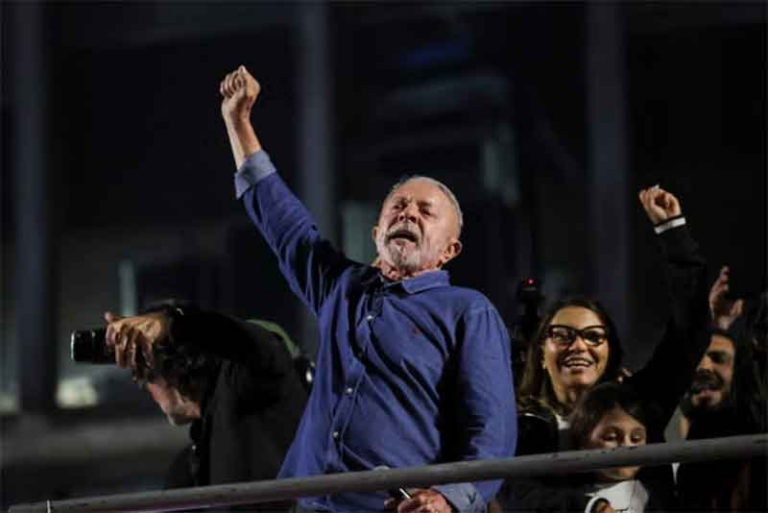
Progressive prospects looked dim in Brazil, especially when far-right Flávio Bolsonaro beat leftist Lula da Silva – with help from Washington – by 47.03% to 45.16% in the first-round election on October 4. Minor-party candidates who had collectively received 5.38% of the first-round vote endorsed Bolsonaro. Compounding the overwhelmingly unfavorable odds for Lula, no candidate trailing in the first round had ever won the runoff.
Lula, a founder of BRICS, has been one of the world’s most prominent Global South leaders, championing multipolarity, national sovereignty, and greater representation for developing countries. Much was at stake for Brazil, Latin America, and the world.
Brazil has the largest population and economy in Latin America. Globally, it ranks second in rare earth reserves and seventh in population, and is approaching eighth in economic size. Brazil encompasses 60% of the Amazon rainforest. Deforestation had declined by approximately 71% since Lula returned to office in 2023; Bolsonaro advocated deregulation.
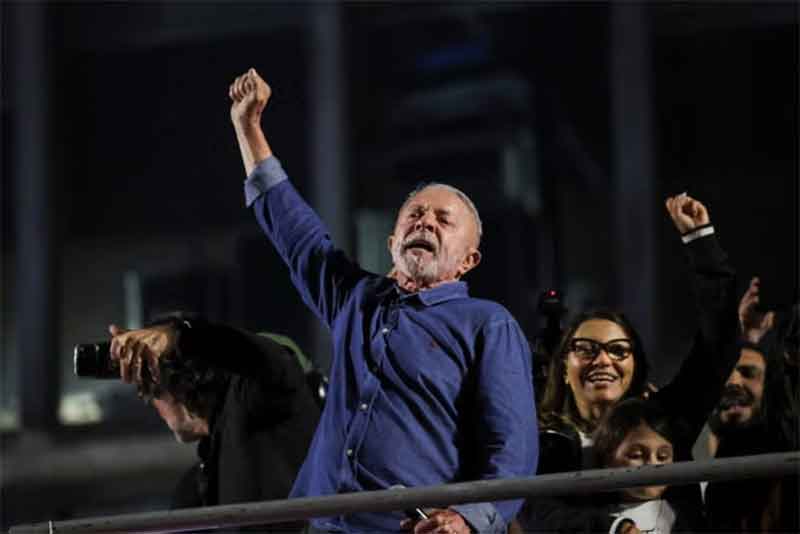
In three short weeks, Lula’s Workers’ Party coalition launched an aggressive social media campaign (“Lula’s Army”) and mobilized voters, especially the youth and the elderly. Some 1.7 million older voters who sat out the first round, participated in the runoff, helping Lula win the election by about 4.5 million votes on October 25.
Weakness on the right
Beyond Lula’s upset victory, other weaknesses of the Latin American right are evident. Its electoral successes – to the extent that they were legitimate – do not necessarily correspond to popular mandates, often reflecting a “punishment vote” against incumbents.
In first-round contests, José Antonio Kast received only 23.9% of the vote in Chile’s December 2025 election. Rodrigo Paz received only 32.1% of the vote in Bolivia. Neither commanded broad first-round support; both won their runoffs after other rightwing parties rallied behind them.
Incumbent Daniel Noboa was in a dead heat with his progressive opponent Luisa González in Ecuador’s 2025 presidential election. Only 0.17 percentage points separated them in the first round. Even sources unfriendly to the left – the European Union and the Organization of American States – reported that Noboa abused the powers of the presidency to gain electoral advantage.
In Peru’s presidential election last June, rightwing Keiko Fujimori defeated leftist Roberto Sánchez by a mere 0.27 percentage points. The razor-thin margin of victory came from highly disputed overseas ballots, making the leftist the undisputed choice of Peruvians living in Peru.
In Honduras’s November 2025 election, Nasry Asfura won by a meager 0.74 percentage points after a disputed count. Abelardo de la Espriella won Colombia’s June 2026 election by less than a point. Washington’s interference in Colombia and Honduras arguably contributed to those far-right victories, for which Trump claimed credit.
The fragility and corruption of the right are further illustrated by Paraguay, where President Santiago Peña was elected in 2023 with only 42.93% of the vote. On November 6, he was impeached and removed amid a banking scandal and subsequently placed under house arrest.
MAGA’s declining popularity
Nor have electoral victories necessarily translated into durable popular support for the right. Bolivia’s Rodrigo Paz, Chile’s José Antonio Kast, Peru’s Keiko Fujimori, and even Argentina’s Javier Milei suffer from disapproval ratings comparable to those of their mentor in the White House – and for much the same reason: failure to deliver.
With the exception of Bukele, none of the new right leaders have significantly positive popularity ratings, and almost all are facing strong popular opposition. They are now expected to solve the problems that propelled them into office, particularly rising crime rates.
Washington’s standing in the region has likewise declined, with public trust tumbling from 62% in 2012 to only 40% today. This fallout reflects popular dissatisfaction with politically motivated tariffs, killing people in small boats in the eastern Pacific and Caribbean, racist targeting of Latino migrants, and interference in the internal political affairs of otherwise sovereign states.
Respondents in every Latin American and Caribbean country surveyed except the Dominican Republic identified the US as the world’s greatest threat in the 2026 Democracy Perception Index. Of the 17 Latin American countries surveyed, 15 viewed China’s influence more positively than that of the US, according to a 2026 Latinobarómetro poll.
Consolidation interruptus
Lula’s victory interrupts the consolidation of US-aligned political power in Latin America, demonstrating that its rightward trajectory can be reversed. As a New York Times op-ed observes: “The region’s rightward shift reflects less of an ideological transformation than a widespread frustration with governments that have overpromised and underperformed for decades.”
Yet the weaknesses of the right do not necessarily translate into strength on the left. Despite Flávio Bolsonaro’s flight to the US following his defeat, Lula still faces an antagonistic legislature, powerful agribusiness and financial interests, hostile media, a sizable right-leaning evangelical movement, and an unfriendly military and police establishment.
Perhaps Lula’s biggest “stress test” will come from the hegemon to the north, which has yet to recognize his win. More broadly, curbing US imperialism remains key to a revival of the Latin American left. In that effort, progressives can draw lessons from Lula’s remarkable mobilization of the Brazilian electorate.
Roger D. Harris is active with the Task Force on the Americas and the Sanctions Kill! Campaign.
About the author
Share this article
Tags
Countercurrents is answerable only to our readers. Support honest journalism because we have no PLANET B.
Get the CounterCurrents daily newsletter straight to your inbox.
Get our updates on WhatsApp, Telegram and Google News, or add us as a preferred source on Google Search.
Paraguay is undergoing one of the most significant political and financial crises in its recent history. The Central Bank of Paraguay’s intervention in Ueno Bank—following the detection of serious irregularities…
Ecuadorian leftist leader Luisa González recently warned that there is “a whole sinister network involving Marco Rubio, MAGA, and Latin American presidents who are destroying our countries to turn Latin…
The leftist leader Luiz Inácio Lula da Silva secured a historic victory in Brazil’s presidential election on 25 October 2026. The result came amid intense political and social polarization and…
RIO DE JANEIRO—Luiz Inácio Lula da Silva’s victory in Brazil’s presidential election is a blow to Donald Trump’s plan for the Western Hemisphere. The US president was hoping to huddle…
“The old world is dying, and the new world struggles to be born: now is the time of monsters.”— Antonio Gramsci The vigorous political resurgence of the Latin American left…
BUENOS AIRES—Nearly three years after Javier Milei became Argentina’s president, the chainsaw-wielding free-marketeer has established himself as the darling of the far right. Brazil’s right-wing presidential candidate, Flávio Bolsonaro, is…
Get the latest CounterCurrents updates straight to your inbox.
Join Countercurrents Annual Fund Raising Campaign and help us keep independent journalism running.
by Junaid S Ahmad
by Vijay Prashad
by Thania Saucedo
by Muhammad Adel Zaky
by Bharat Dogra
by Dr Salim Nazzal
by Robert Hunziker
by Colin Todhunter
by Bhabani Shankar Nayak
by Hiren Gohain
by Pon Chandran
by Dr Kaushik Ghosh
by Quds News Network
by Ali A Kiafar
by E A S Sarma
by Sabhayata Singh
by Harsh Thakor
by Dr Salim Nazzal
by Shiraz Durrani
by Milos Bujisic
by Homi Kharas, Julie McCarthy and Ichiro Sato
by Mahesh Ganguly and Amaan Siddiqui
by Bharat Dogra
by Pon Chandran
by Vivek Sakpal
by Bhabani Shankar Nayak
by Countercurrents Collective
by Andy Worthington
by Phil Pasquini
by Quds News Network
by Dr Kaushik Ghosh
by Vivek Sakpal
by Bhabani Shankar Nayak
by Binu Mathew
by Binu Mathew
by Binu Mathew
Independent news and analysis for people and planet, delivered by email.
Independent journalism for people and planet. Founded on March 27, 2002 by Binu Mathew, bringing you news and analysis for over two decades.
Educate! Organize! Agitate!
Write to us
© 2026 CounterCurrents.org · All rights reserved · Independent journalism since 2002
About the Author