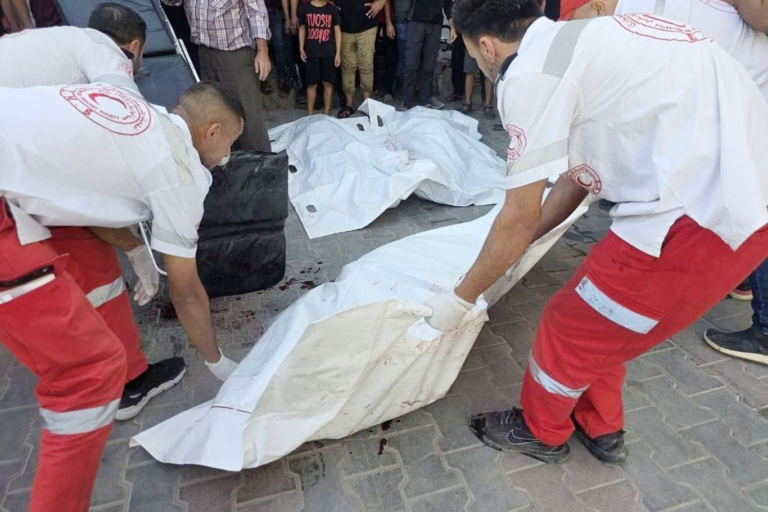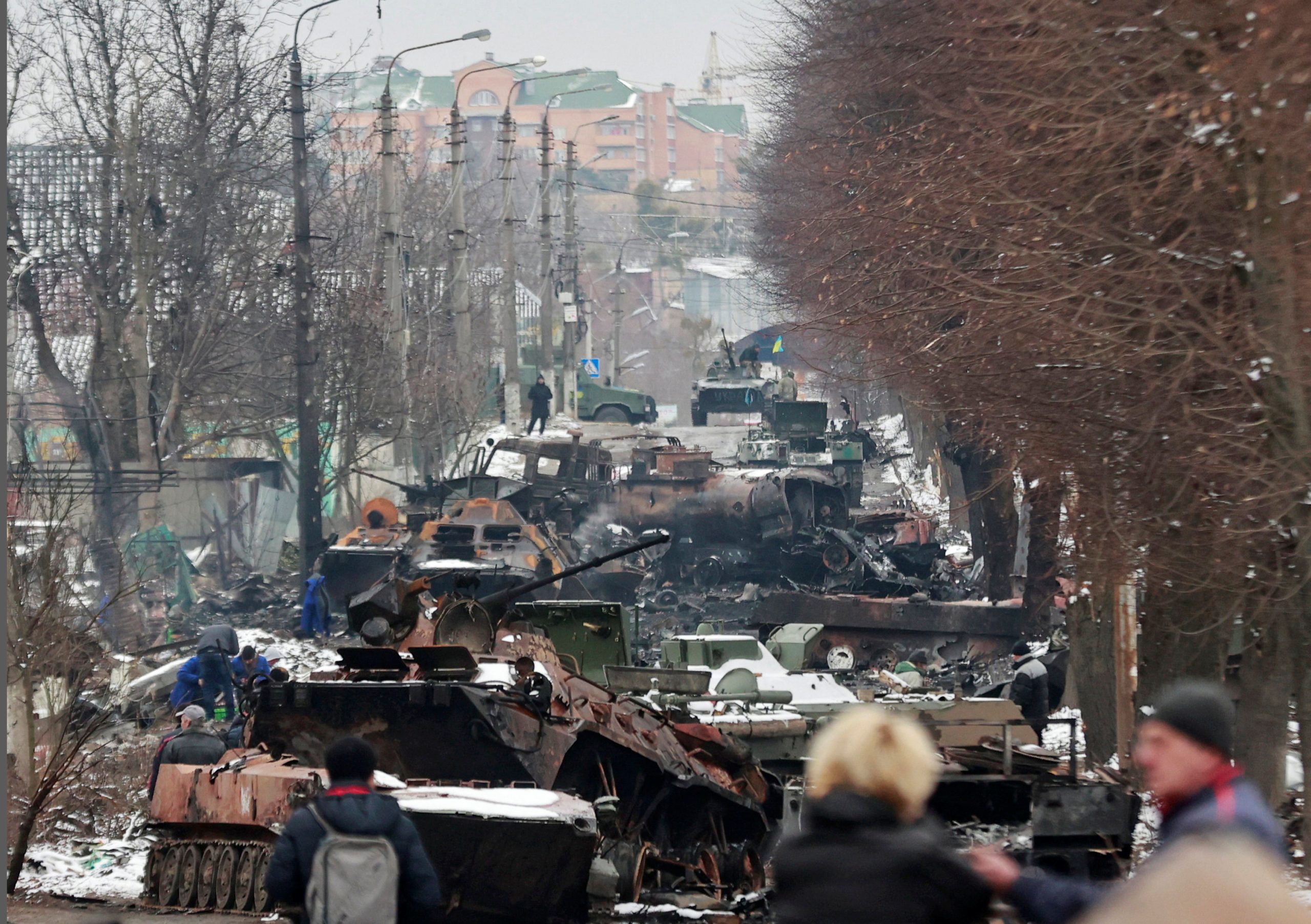
The southern Ukrainian front-line city of Oleshky, along the Dnipro River in the Russian-occupied Kherson region, is an area of acute civilian suffering amidst protracted war. The Associated Press noted that this city was captured on the first day of Russia’s full-scale invasion in February 2022, with a pre-war population of 24,000 people plummeting to between 1,700 and 2,000 residents. The remaining population is predominantly elderly individuals and approximately 50 children. Conditions deteriorated catastrophically following the June 2023 collapse of the Kakhovka Dam, which flooded around 90 percent of the city. For months, remaining residents have endured infrastructure breakdowns without heat, electricity, running water, or reliable access to medicine and food. On top of this, the city is isolated due to heavily mined roads, burned-out vehicles, and constant aerial bombardment.
In an unprecedented diplomatic development as reported by several news outlets, including the AP, CBS News, and Reuters, US First Lady Melania Trump initiated and coordinated direct negotiations between Russian and Ukrainian leadership to establish a localized, temporary ceasefire in Oleshky. Acting in an official capacity as an exclusive intermediary after learning of the crisis during the UN General Assembly, she helped align both warring parties on operational terms. Under this agreement, Russian forces agreed to halt military actions along the Kherson axis, enabling engineering reconnaissance teams to perform landmine removal prior to the entry of humanitarian convoys delivering essential food, water, and medical aid. Furthermore, the accord establishes a designated safe corridor allowing non-military teams to assist elderly residents and coordinate voluntary civilian evacuations to preferred destinations in either Ukraine or Russia. Welcomed by UN Secretary-General António Guterres, and backed by chief Ukrainian negotiator Dmytro Lubinets and Russian officials, this localized pause demonstrates how targeted diplomatic intervention can temporarily open life-saving relief channels in active combat zones.
While the localized ceasefire in Oleshky brings vital, immediate relief to an imperiled population, reliance on high-profile, ad-hoc personal mediation highlights structural flaws in the global humanitarian framework. Contemporary international crisis management increasingly depends on isolated arrangements that alleviate acute, localized distress, with little attention to the underlying drivers of civilian vulnerability: war.
In the context of the conflict in Ukraine, overarching peace negotiations remain bogged down by broader geopolitical frictions, shifting security alliances, and strategic disputes over military assistance and recent satellite communications access. A central critique of ad-hoc humanitarian interventions is their departure from established multilateral mechanisms, resulting in unpredictable, discretionary corridors of relief rather than mandatory compliance with international humanitarian law as posited by organizations like the International Committee of the Red Cross. Under international conventions, occupying powers bear an explicit legal duty to guarantee that civilian populations under their control receive basic food, medical supplies, and essential life-sustaining services. In this situation, when basic human survival depends on specialized, periodic diplomatic interventions rather than enforceable international obligations, humanitarian access can become dangerously subject to political bargaining and publicity requirements. In other words, relying on private media outlets or temporary bilateral assurances rather than permanent, neutral international monitoring bodies, such as the ICRC or UN observation missions, leaves even so-called safe passageways vulnerable to sudden security breakdowns.
Moreover, executing localized ceasefires in contested combat zones without institutionalized monitoring mechanisms exposes civilians and aid workers to severe operational risks. There are heavy risks in having to navigate people through unexploded ordnance, active drone space, and roadways laced with mines, so the experts who clear these paths must be incredibly thorough, and they themselves must also be careful.
Looking to the future, to transform isolated breakthroughs like the Oleshky agreement into dependable protections, the international community may need to adjust its approach to humanitarian leadership during global crises. Perhaps an element of this structural reform is standardized, internationally protected civilian relief corridors operated under neutral verification protocols. Drawing on the established principles of international peacekeeping and neutrality, these corridors could be overseen by non-combative UN observation teams equipped with mine-clearance protocols, continuous satellite tracking, and pre-negotiated safe zones.
On another note, global crisis leadership must also directly link humanitarian compliance to international economic and diplomatic conditionalities. In other words, sovereign states involved in armed conflict should face diplomatic penalties if they restrict access to essential food, clean water, and medical care for civilian populations, an idea that extends beyond the Russia-Ukraine conflict. There’s a chance that integrating verifiable humanitarian access metrics into bilateral trade agreements, diplomatic relations, and international aid negotiations would establish tangible strategic incentives for warring parties to maintain open humanitarian supply lines, thereby eliminating the temptation to weaponize civilian hardship.
In contrast to an institutionalized protocol, an effort with potential to create change is a multi-tiered approach that empowers local civilian officers and non-governmental actors. That is, developing decentralized civic protection networks that equip local authorities with the legal recognition and communication tools necessary to coordinate home visits or assess medical needs, especially so that spoken aid can at last reach the ground. This might be done through a combination of mandatory compliance enforcement and protected local implementation networks, where the international community can move beyond reactive crisis response and build a sustainable global architecture that guarantees civilian safety across conflict zones.
Even these single-city missions leave hope for humanitarianism at a greater scale, and if this initiative is successful, it demonstrates that life-saving relief remains achievable even amidst the most bitter, front-line hostilities. Still, this breakthrough exposes how modern global governance allows a single individual to call for change, while internationally recognized organizations with long-standing institutional histories struggle to call for immediate aid missions involving highly debated conflict parties. The history of neutrality may have been strategic and successful, but the passage of time must also change the aims of organizations, particularly those that have the authority to spearhead aid out of compassion rather than remaining paralyzed by bureaucratic neutrality in times of intense conflict. In the current state of the world, conflicts happen at such devastating levels that uncertainty and hesitance can cause the preventable suffering of thousands. As teams prepare to enter Oleshky, the world will have to see how this mission proceeds, and whether global institutions can evolve to deliver urgent leadership and action that human survival requires.
The Problem and Response On April 15th, 2023, civil war erupted in Khartoum after a power struggle between the Sudanese Armed Forces (SAF) and the
On Monday 17 August, Donald Trump ordered significant reductions to planned military exercises with South Korea in order to appease North Korean leader Kim Jong
As defined by the United Nations, a refugee is an individual who is forced to leave their home nation due to war, persecution, or violence,
About the Author