A Reuters investigation published on November 1st, 2026, raises precisely that concern. According to the report, the White House has spent months preparing ways to continue implementing Trump’s political agenda through executive authority should Democrats win control of Congress in the midterm elections. Senior figures, including presidential adviser Stephen Miller and budget director Russell Vought, are reportedly examining how presidential powers could be used to circumvent congressional opposition.
The areas under consideration reportedly include immigration, tariffs, housing and federal spending. The administration is also preparing for the prospect of congressional investigations into its activities, including possible claims of executive privilege to resist demands for information.
On one level, this is politics as usual. Every American president wants to advance his programme, and executive orders have long been used by administrations of both parties when Congress proves unwilling or unable to cooperate.
But there is a more disturbing dimension to this development. When does a president’s determination to bypass political opposition become an attempt to undermine the constitutional system itself?
And, more importantly, is Donald Trump contemplating something considerably more ambitious than simply governing without Congress?
Americans have already witnessed what can happen when Trump’s political ambitions collide with the constitutional machinery of government.
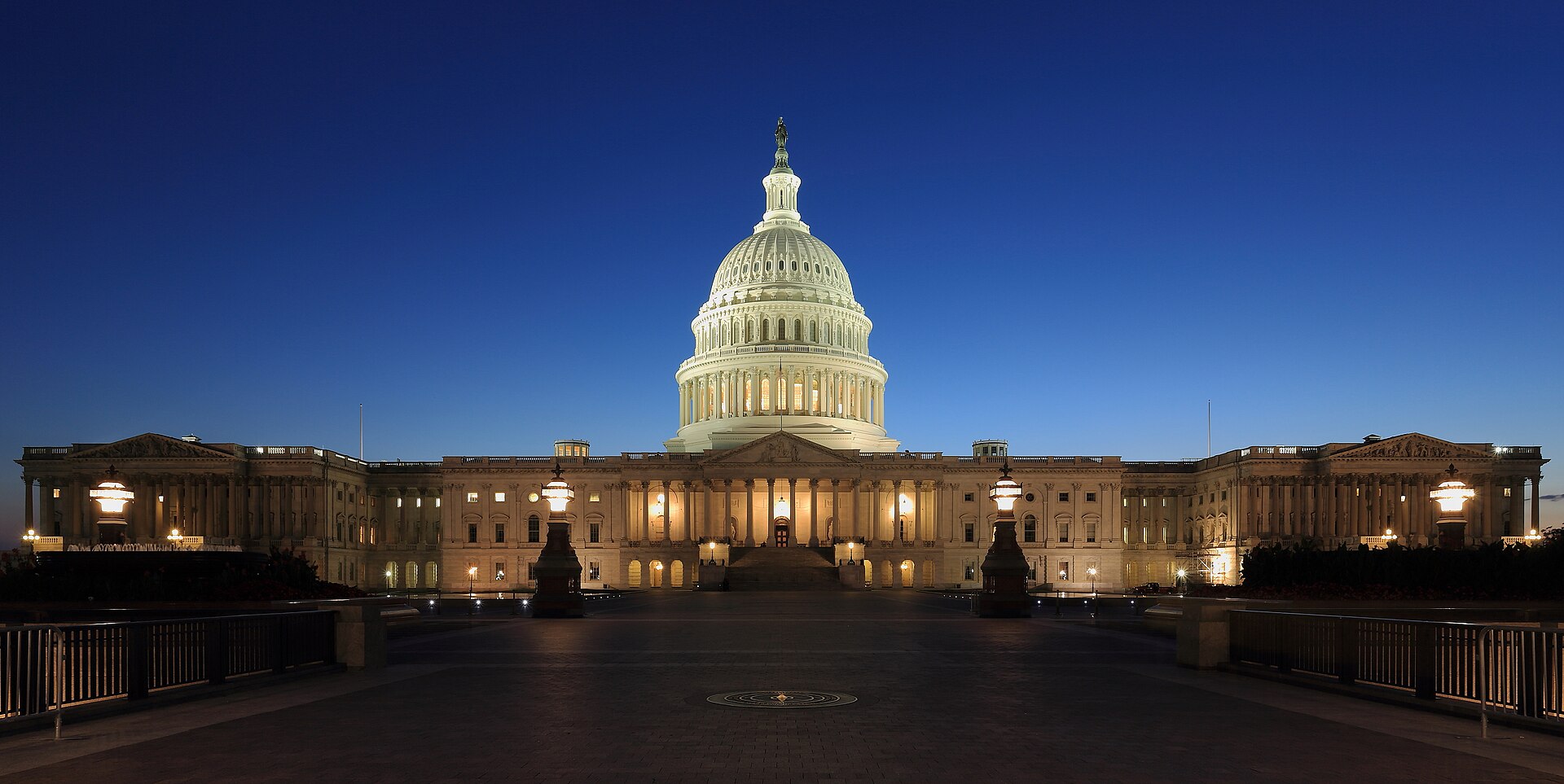
On January 6th, 2021, following his defeat by Joe Biden in the presidential election, thousands of Trump supporters descended on Washington. After a rally at which Trump repeated allegations that the election had been stolen, his supporters marched towards the Capitol.
What followed was one of the darkest episodes in modern American political history. The Capitol was breached. Members of Congress were forced to flee or seek shelter. The certification of the presidential election was interrupted as police officers fought to contain the violence.
The objective of the congressional proceedings was straightforward: formally certify Biden’s victory. Yet the process was disrupted by a mob acting in the name of a president who refused to accept his electoral defeat.
The subsequent congressional investigation documented Trump’s pressure on elected officials, his promotion of false election claims and his failure to act promptly to stop the violence. Many participants in the attack were subsequently prosecuted and imprisoned, although President Trump later issued sweeping pardons and commutations for January 6th defendants.
The significance of January 6th extends beyond the violence itself. It demonstrated that the peaceful transfer of power, a principle that had survived America’s civil war and numerous political crises, could be placed under extraordinary pressure by a sitting president. That history cannot simply be dismissed as an unfortunate episode from Trump’s first presidency.
The Reuters revelations raise legitimate questions about the boundaries of presidential authority.
The American Constitution deliberately divides power between the executive, legislative and judicial branches. Congress has the authority to enact legislation, approve federal spending, conduct investigations and exercise oversight over the executive. The president, meanwhile, is responsible for executing the laws passed by Congress. These are not administrative inconveniences. They are fundamental safeguards against the concentration of political power.
Trump’s apparent willingness to explore the limits of unilateral executive action suggests an administration preparing for confrontation with the legislature rather than compromise.
There is nothing inherently unconstitutional about a president using lawful executive authority. However, an administration cannot simply disregard legislation, appropriate money without legal authority or assume that presidential directives automatically override congressional statutes.
The courts remain an essential check on executive power, but what happens if the White House repeatedly tests those boundaries, challenges adverse judicial decisions and treats congressional oversight as illegitimate?
A constitutional crisis does not necessarily begin with tanks outside parliament or soldiers occupying government buildings. It can develop through a succession of apparently technical decisions that gradually weaken the institutions responsible for restraining executive power.
There is an even bigger question. Trump is serving his second presidential term. The 22nd Amendment to the US Constitution prohibits anyone from being elected president more than twice. His current term is therefore scheduled to end at noon on January 20th, 2029.
Could he nevertheless attempt to remain in power? There is currently no evidence in the Reuters report establishing that Trump is preparing a coup, planning to cancel elections or intending to refuse to leave office when his constitutional term expires.
It would be irresponsible to present such a conclusion as an established fact. Nevertheless, the possibility deserves scrutiny, particularly given the events of 2021.
Would Trump accept an electoral defeat for his party as a legitimate expression of the American electorate’s wishes? Would he accept a Democratic-controlled Congress investigating his administration? And, looking further ahead, would he accept the constitutional requirement to surrender the presidency in January 2029?
These are questions that should be answered through actions rather than assurances.
The distinction between governing aggressively and undermining democracy is an important one. But it is also a distinction that can become blurred when the executive repeatedly seeks to expand its authority at the expense of other constitutional institutions.
One of the greatest dangers facing American democracy is that extraordinary political behaviour can gradually become normalised.
If a president repeatedly challenges the authority of Congress, attacks judges who rule against him, dismisses independent institutions as politically motivated and portrays opponents as enemies of the state, the cumulative effect can be profoundly damaging.
The concern is not simply that Trump might issue more executive orders. It is whether the political culture surrounding his presidency is becoming increasingly intolerant of constitutional restraints.
There is also a distinction between winning an election and acquiring unlimited authority. Even a president with a substantial electoral mandate remains subject to the Constitution. The American system was designed precisely to prevent an individual from exercising unchecked power.
The midterm elections will therefore represent an important test of the relationship between the White House and Congress. A Democratic victory would not deprive Trump of his presidential powers, but it would restore an important mechanism of legislative scrutiny.
And that scrutiny is precisely what the constitutional system is supposed to provide.
Perhaps the most disturbing aspect of the present situation is that America has already experienced a serious attempt to disrupt the democratic transfer of power. January 6th was not an abstract constitutional debate. It was a physical assault on the institution responsible for certifying the outcome of a presidential election.
The fact that it happened once should make Americans particularly alert to the possibility of another confrontation between presidential ambition and constitutional authority.
It would be premature to declare that Trump is planning a coup. The Reuters investigation does not establish that. Governing through executive powers, even aggressively, is not in itself a coup. However, it would be equally complacent to dismiss every warning sign as merely another example of Trump’s unconventional political style.
The fundamental question is whether the president recognises that his authority is temporary, limited and ultimately subordinate to the Constitution.
A president who seeks to govern without congressional cooperation is exercising political power. A president who seeks to govern without constitutional constraints is attempting something altogether different.
A president who refuses to surrender power when his term expires would cross a line that no American president has the right to cross. America’s founding fathers understood the dangers of concentrated executive authority. They created a system of checks and balances because they understood that democracy depends not simply on who wins power, but on whether those who win are prepared to relinquish it.
The question facing America is no longer simply whether Donald Trump can govern without Congress. It is whether America’s institutions, its courts, its elected representatives and ultimately its citizens will be prepared to defend the Constitution if the president attempts to place himself above it.
Gary Cartwright is the publisher and editor of EU Today. He is a member of the Chartered Institute of Journalists, and a former adviser to UK Members of the European Parliament. He is the author of two books, Putin’s Legacy: Russian Policy and the New Arms Race (2009) and Wanted Man: the story of Mukhtar Ablyazov (2019)
Stay connected with EU Today and be among the first to hear about new reporting, interviews, events and subscriber updates.
EU Today brings you the latest news and commentary from across the EU and beyond.
A new EU Today white paper examines how fossil energy is used for war and coercion.
© EU Today 2014–2026. All rights reserved.
EU Today LTD, 71–75 Shelton Street, Covent Garden, London WC2H 9JQ
Privacy and cookie settings | Sitemap | Contact Us
About the Author