South Africans have two regulatory proposals to consider in December: a Remgro-backed company’s application to trade electricity across Southern African borders and a plan to require fingerprint or facial verification for mobile SIM cards.
Neither proposal has been approved. The National Energy Regulator of South Africa (NERSA) will hold a public hearing on the electricity application on December 7, while the Independent Communications Authority of South Africa (ICASA) is seeking written comments on proposed biometric SIM verification rules by December 9.
The proposals address different challenges. One concerns the expansion of private electricity trading across national borders. The other seeks to strengthen mobile subscriber identification to combat SIM-related fraud, while raising questions about privacy, data protection and implementation costs.
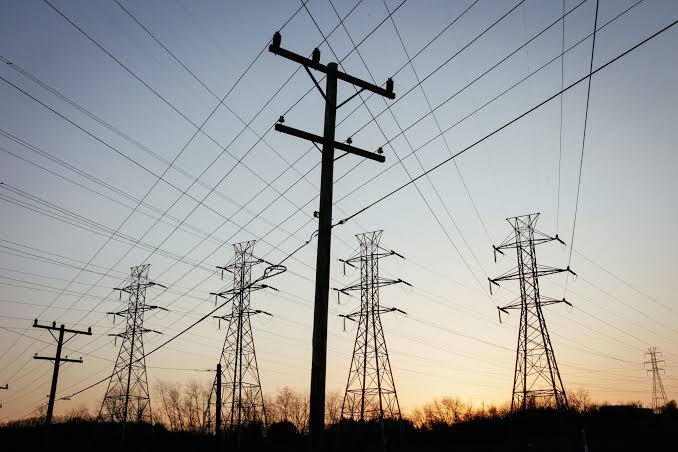
Power: Remgro-backed company seeks cross-border trading licence
Energy Exchange of Southern Africa (EXSA) has applied to Nersa for an import-export licence covering South Africa and the Southern African Development Community (SADC).
Nersa will consider the application at a virtual public hearing on December 7, from 9:30 a.m. to 1 p.m. Interested parties must register to speak by 4:30 p.m. on November 30. Billionaires Africa reported that the hearing would be cancelled if no one registers.
EXSA is controlled by Remgro through its Ubiquity Energy unit. Remgro established the business in 2017, while FirstRand’s Rand Merchant Bank acquired a 25 per cent stake in Ubiquity Energy in 2023.
Nersa granted EXSA a domestic electricity trading licence in 2022, and the company began trading in 2023. Its business involves purchasing renewable electricity from private wind and solar producers and wheeling it through Eskom’s transmission and distribution network to corporate customers.
These customers include Mediclinic, Woolworths, Old Mutual and Siqalo Foods, according to Billionaires Africa.
In August 2025, EXSA agreed to purchase all the electricity generated by Seriti Green’s 155MW Ummbila Emoyeni wind farm in Mpumalanga under a 15-year power purchase agreement.
EXSA is not the first private electricity trader to seek cross-border trading rights. GreenCo Power Services received the first private import-export licence in October 2024, while Enpower Trading secured a licence covering SADC in 2025, TechCentral reported.
The proposed expansion comes as the government weighs electricity exports against domestic supply requirements.
Energy Minister Kgosientsho Ramokgopa told an audience at Wits Business School that neighbouring countries connected to South Africa face an electricity deficit of approximately 6GW, while South Africa has an average surplus of about 4GW.
“Before we think of exporting the electrons, we must be satisfied that we are able to meet our own demand,” he said.
He added: “I do caution that the speed with which we enter that market must be measured.”
South Africa’s ability to expand electricity exports also depends on transmission infrastructure that remains behind schedule.
The first phase of independent transmission projects envisages 1,164 kilometres of new power lines. However, on October 1, National Treasury and the Department of Electricity and Energy moved the final request for proposals to the second quarter of 2027.
Busi Mavuso, chief executive of Business Leadership South Africa, warned that “on the current trajectory, the new grid infrastructure is unlikely to be operating by the end of the decade.”
EXSA has not disclosed which countries it intends to trade with or the volumes it expects to move across borders. The company has also not published its financial contribution to the wider Remgro group.
Separately, Eskom is challenging five other electricity trading licences issued by Nersa, arguing that the new entrants could avoid contributing towards certain subsidies. The case has been stayed while Nersa finalises its electricity trading rules. EXSA’s application is not among the five licences being challenged.
SIMs: Icasa proposes biometric checks for every number
While Nersa considers the electricity application, Icasa is seeking to change how mobile subscribers are identified.
On October 28, the regulator published draft amendments to its numbering rules that would require telecommunications operators to verify subscribers’ fingerprints or faces against Home Affairs records when a SIM card is activated, reactivated or replaced.
The proposed requirements would apply to prepaid and postpaid customers, with existing subscribers also required to undergo verification.
Companies would be exempt from the biometric checks. The draft also proposes limiting individuals to five mobile numbers on a single network.
Icasa’s figures show the scale of the registration challenge. South Africa has 117,316,338 mobile subscriptions among a population of approximately 63 million, equivalent to 2.79 subscriptions per person.
Under the proposed rules, fines for certain breaches of verification requirements would range from R2 million to R4 million per contravention.
The rules would take effect 12 months after final publication, giving operators a further two years to verify existing subscribers. Written submissions are due by December 9, according to SA Tech News.
Icasa councillor Dikeledi Catherine Mushi, who chairs its Numbering Resources Committee, told EWN that SIM-related fraud had become a significant concern.
“We’ve experienced a lot of what most people would refer to as SIM-related fraud,” she said.
The principle behind the proposal, she added, is that “every number has to have somebody sitting behind it”. The verification process, she said, works “within seconds”.
However, the coverage reviewed for this article does not provide statistics showing the scale of SIM-related fraud or how much the proposed checks could reduce it.
Telecoms industry questions the framework
The mobile industry supports stronger subscriber verification but has challenged how Icasa intends to introduce the requirements.
The Association of Comms & Technology, which represents Vodacom, MTN, Telkom, Cell C, Rain and Liquid Intelligent Technologies, says there are “material differences between Icasa’s proposals and the framework developed by industry”.
Its chief executive, Nomvuyiso Batyi, questioned why substantive subscriber registration requirements were being introduced through numbering regulations rather than the Regulation of Interception of Communications and Provision of Communication-Related Information Act, commonly known as RICA.
The association has also called for an assessment of the financial costs and technical feasibility of connecting operators’ verification systems to Home Affairs records.
Icasa maintains that its proposed biometric verification process is separate from existing RICA registration requirements.
The distinction matters because the proposal would introduce an additional verification layer, requiring operators to interact with government identity records whenever certain SIM-related transactions occur.
Privacy concerns extend beyond registration
The proposed checks have also raised questions about who would hold biometric information and how it would be protected.
In an opinion article published by TechCentral, Lloyd Matthew, chief executive of Untapped AI, and Heinz Vollmer, a director of Untapped AI and chief executive of Yaxxa, warned against allowing private companies to retain or share fingerprint data.
“You can change a password and cancel a bank card, but you can never cancel your finger,” they wrote.
The authors want Icasa to prevent private companies from storing, sharing or cross-referencing fingerprints, leaving the Department of Home Affairs as the sole custodian of the biometric records.
They also proposed alternatives that would avoid retaining biometric information, including storing fingerprints in a SIM card’s secure chip or using encrypted matching against Home Affairs records.
The draft regulations are narrower than some of the concerns raised by the commentators. They stipulate that biometric information may only be used for identity verification and that records must be destroyed within 30 days of a number’s deactivation, unless a law, contract or subscriber consent permits longer retention.
However, SA Tech News reported that the draft does not clearly explain who would store the biometric data, how operators would exchange information with Home Affairs or who would pay for the verification checks.
Those questions are likely to feature prominently in submissions from telecommunications operators and privacy advocates.
Two regulatory processes, two deadlines
The electricity trading application and biometric SIM proposal have no direct legal connection. Nersa regulates the electricity trading application, while Icasa is responsible for the telecommunications numbering rules.
Both processes, however, are at a stage where public participation could influence the final decisions.
For the electricity market, the immediate question is whether EXSA will secure permission to trade across borders while South Africa continues to address its own transmission constraints and domestic supply requirements.
For telecommunications, the debate centres on whether biometric verification can reduce SIM-related fraud without creating disproportionate privacy risks, implementation costs or barriers to mobile access.
The immediate deadlines are November 30, when registration closes for the Nersa hearing; December 7, when the regulator considers EXSA’s application; and December 9, when Icasa’s written comment period closes.
Neither regulator has made a final decision.
Your email address will not be published.
CIO Africa serves the enterprise community of CIOs and senior technology decision-makers with peer insight and expertise on Business Strategy, Innovation and Leadership. CIO attracts the highest concentration of enterprise CIOs and business technology executives of any media brand, reaching over one million.
© 2010 – 2026 Chief Information Officer Africa Ltd. All rights reserved.
Privacy Policy
Terms of Service
About the Author